Composting Food Waste
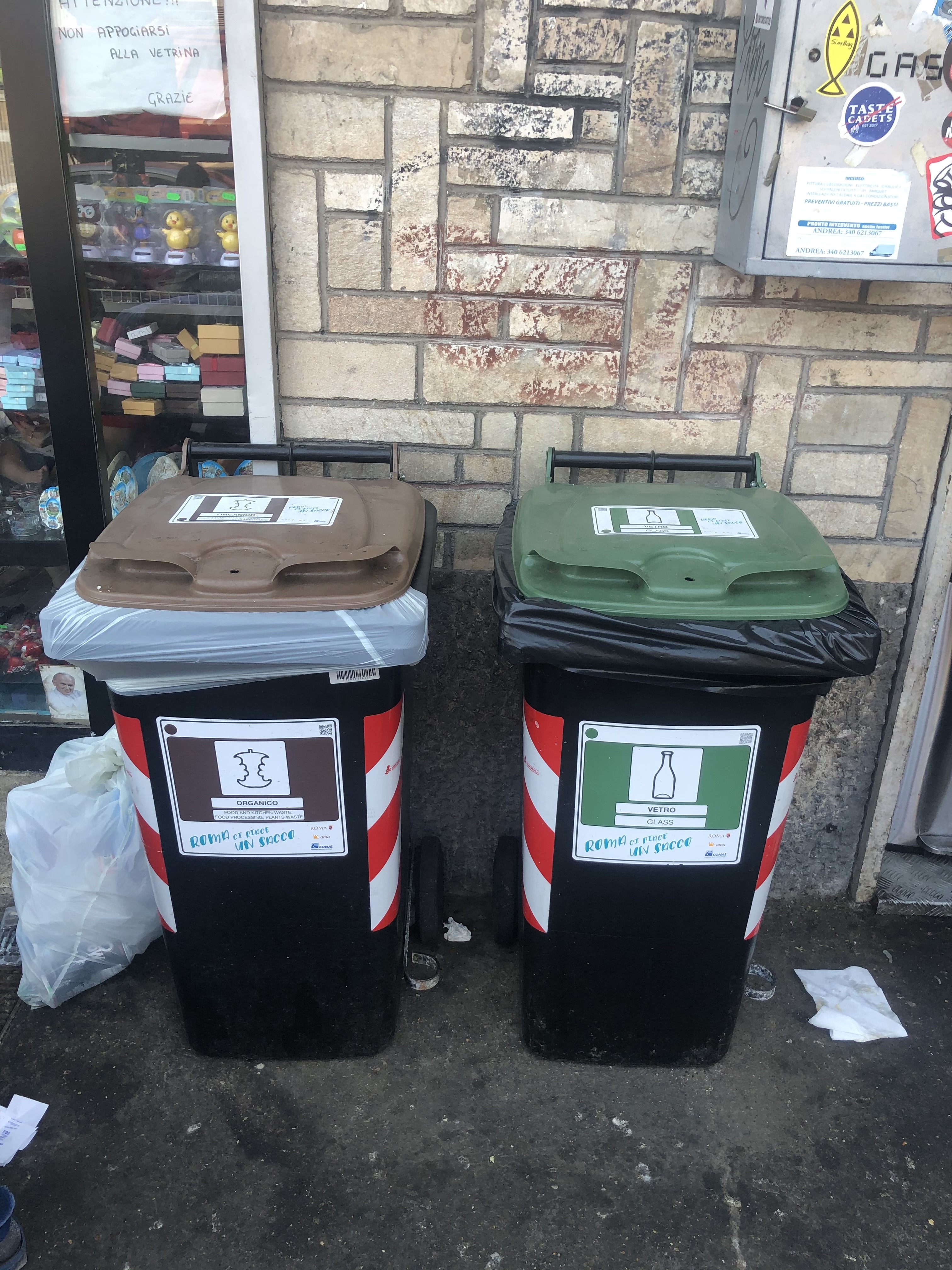
With the exception of UMD, I rarely find collection bins in the U.S. that stray away from the labels of “Trash” and “Recycling”. My campus has been adamant on including compost bins around campus in recent years, but that’s about it. However, Rome was a whole different story. They take trash separation VERY seriously. The apartments my peers and I stayed in during our visit all had multiple trash bins for various materials. Dumpsters lining public streets and alleys had explicit instructions on what items belonged. Even various food establishments were equipped with multiple bins for different kinds of waste! Pizzarium (a pizza joint about 3 min walking distance from my place) was the best example I saw of this, as they had 5 different bins! To say I was impressed is an understatement.
Rome is clearly doing it right when it comes to trash separation, and their inclusion of food compost bins is extremely important in today’s world! Composting is an effective way of preserving our beloved planet Earth, as doing so directly benefits our environment and agriculture practices. Food waste that is not composted is usually placed in a landfill; these trash wastelands are quickly reaching full capacity and organic waste placed in them can react with other materials to create toxic waste. Therefore, composting is a big deal! Rome is doing an awesome job with addressing this large, environmental concern. My apartment owner was very clear that my peers and I compost correctly; in fact, many Romans actually became upset when they saw a tourist place food waste in the wrong bin! I’m glad that there’s some passion surrounding composting. Hopefully, America can follow suit and begin implementing compost bins into every home, establishment and trash collection site across the nation. -Jamal
FAO’s Sustainable Food Goals

During our study abroad trip in Rome, our class visited the United Nations Food and Agriculture Organization (FAO) headquarters. We received a tour of the complex and our guide emphasized the UN’s 17 Sustainable Development goals, of which two particularly stood out to me: Zero Hunger and Sustainable Production and Consumption. These goals are inherently intertwined; as a society, we have to be efficient and sustainable with our food production to ensure the entire population has enough food and no one goes hungry. She explained that to tackle these goals by 2030, the UN looks to reduce global food waste by half and increase sustainable agriculture practices around the world. As an American college student, I was curious to see how Italy worked to achieve those ambitious goals.
Food waste is a big deal in Italian culture. Freshness is a guiding principle and the cuisine, and that’s why there are no doggie bags in Italy. However, this does not mean that food on the verge of rotting gets wasted. The Italian Ministry of Environment worked with the EU in 2013 to create a National Plan for Food Waste Prevention. This plan has made it easier for markets and restaurants to donate unsold goods to food banks and other charities, thus reducing food waste by preventing these goods from getting thrown away or expiring, as well as feeding the hungry. The plan also promotes more sustainable practices in the supply chain, effectively limiting food loss during the production and transportation phases of food products. This piece of legislation goes a long way to show that Italy is committed to playing its part in achieving the UN’s goals by 2030.
Italians also have sustainability ingrained in their food culture through the use of local and seasonal ingredients. Many of the restaurants that we visited in Rome bought ingredients from local farms, cutting down on the food lost during transportation while still receiving a quality product. Additionally, Italian cuisine is especially focused on seasonally fresh ingredients, which relates back to sustainable agriculture practices. By utilizing fruits and vegetables at the peak of their seasons, Italians receive a high quality product at a very low environmental cost. This allows the food to be extremely fresh and tasty, without sacrificing sustainability and making the farms produce out of season crops. The tradition of hyper-seasonal ingredients and regional recipes helps Italy contribute to the sustainable food landscape that the UN’s ambitious goals lay out. -Evan
Water Fountains in Rome

The first time I saw a street water fountain was on my second day of being in Rome. It was so early on, that I was still unsure if the sink water was safe for consumption. While my roommates and I were on an excursion with our professors, we saw someone fill up their bottle and go on their way. They obviously took this as a learning opportunity and explained to us that they are called nasoni or “big nose” and the water is entirely safe for drinking (which also clarified any sink hesitancy). My first thought was that it was great that water was not being treated as a commodity and everyone has equal access to it. As we stood there, however, I looked at it again and thought of the fact that the spout that we saw didn’t have a valve to turn it off and on, rather it just kept running. What happens to all of the water that continuously runs and drains under the streets of Rome?
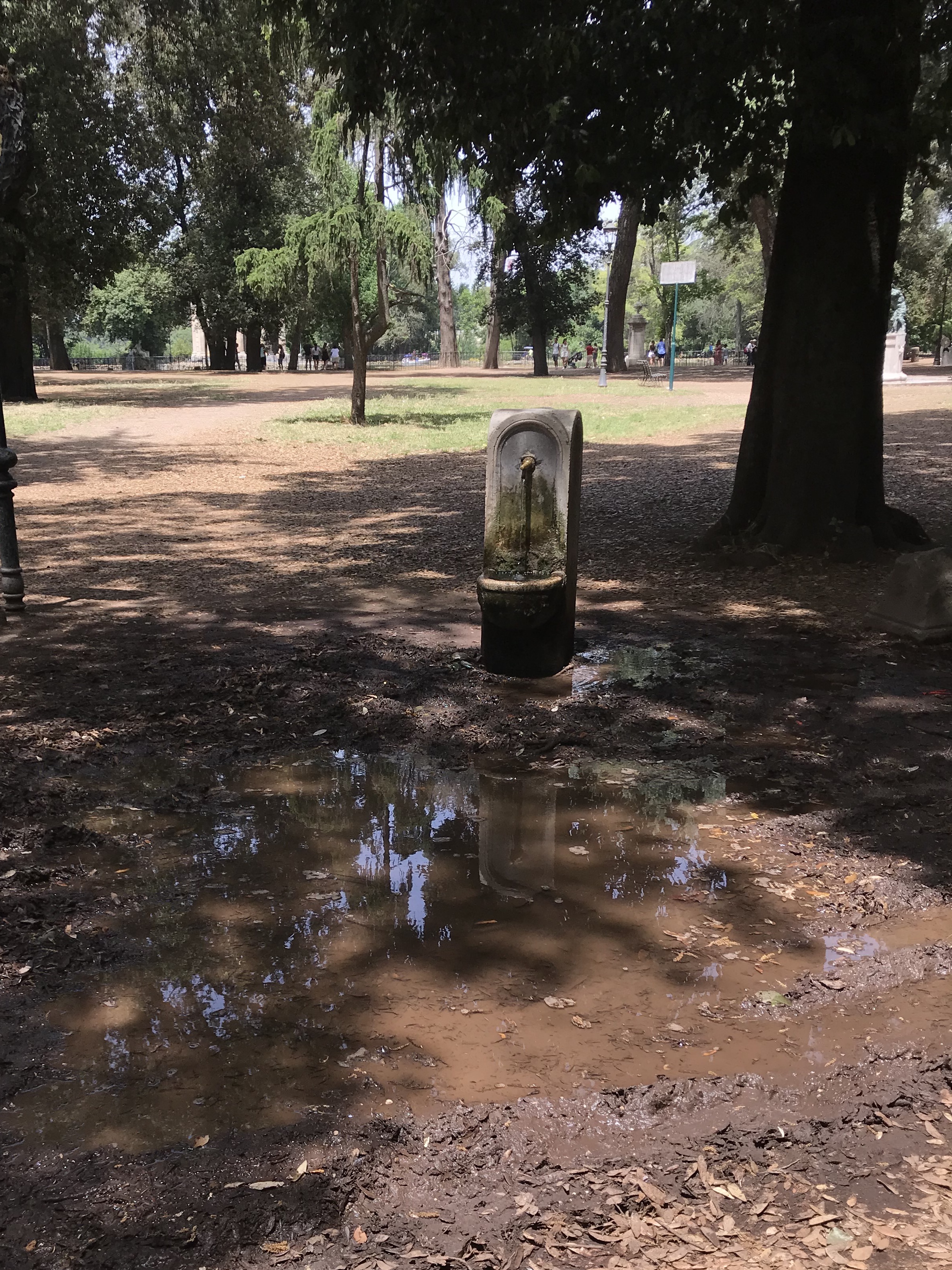
After looking it up later, I found out that the water that is not used is repurposed for water gardens and plants, as well as in shops and factories. While it’s great that they have this mindset, there are over 2,500 fountains across the city that pour about 16,000 cubic meters of water down the drains per day. That’s a lot of plants to water! Despite the seemingly wasteful habit, further research proved that it only accounts for about 1% of water usage in Rome and that is a small price to pay for the benefits that come from it. For example, last year, they were turned off due to a drought and the effects were felt by residents and tourists alike, and the city faced significant amounts of backlash for their conservation efforts. It is a very important aspect of their culture and at this point, people rely on their presence. Though they may seem wasteful and frivolous, it seems that their actual output does not have a significant impact on the environment. Therefore, it seems the benefits provided to those who use them outweigh the necessary costs and the nasoni fountains are worth the waste. – Anna
 Leftover Squad